Robert Schumann Tickets
Up to 30% Off Compared to Competitors.
Location: Select Location (e.g, New York)
Events Nearby
We're Sorry. There are currently no events near you.
About Robert Schumann
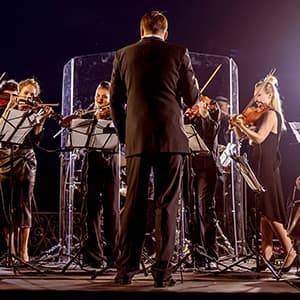
In contemporary settings, Robert Schumann's music continues to resonate, with numerous performances being held globally, celebrating his rich catalog of works. Concerts dedicated to Schumann often feature his beloved piano sonatas and symphonies, particularly the 'Piano Concerto in A minor,' which remains a favorite among both soloists and audiences. Festivals and music series frequently highlight his chamber works, such as the 'Piano Quintet in E-flat major,' an essential piece in the chamber music repertoire. Current symphonic and chamber ensembles are known to include Schumann's compositions, reflecting both historical contexts and modern interpretations. Notable orchestras and music festivals actively showcase Schumann's works, ensuring his legacy thrives in live performances. Moreover, special themed concerts are organized around significant anniversaries of his birth and death, where artists delve into his oeuvre, exploring his early works in tandem with his later, more complex compositions. With an emphasis on both his lyrical style and intricate textures, musicians today are continuously discovering innovative ways to present Schumann's music, often juxtaposing it with contemporary works, creating a dynamic concert experience that appeals to diverse audiences.
Robert Schumann History
Robert Schumann, a pivotal composer of the Romantic era, was born on June 8, 1810, in Zwickau, Germany. His artistic journey began with a strong inclination toward literature, but he quickly turned to music, influenced by the likes of Beethoven and Schubert. Schumann's early career saw him in the role of a pianist and music critic, where he passionately advocated for other composers through his writings. His compositions, such as 'Carnaval' and 'Kinderszenen,' showcase his unique style, characterized by expressive melodies and complex harmonies. Schumann's marriage to Clara Wieck, a prominent pianist, also influenced his musical output, leading to collaborative performances that highlighted his compositions. His mental health struggles, culminating in his eventual institutionalization in 1854, deeply affected his later works and public performances. Despite these challenges, Schumann's music remained a staple in concert programs, and his influence on later generations of composers and performers is undeniable. His contributions to concert repertoire, particularly in piano and chamber music, laid the groundwork for future innovations in live performance.