
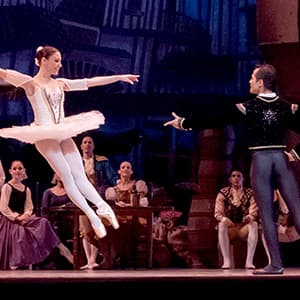
American Icons - Ballet Tickets
Up to 30% Off Compared to Competitors.
Location: Select Location (e.g, New York)
Events Nearby
We're Sorry. There are currently no events near you.
About American Icons - Ballet
In recent years, American ballet has seen significant evolution and diversification. Major companies continue to produce grand productions of classical works, but there is a strong emphasis on contemporary pieces that challenge traditional narratives and incorporate modern sensibilities. The ongoing COVID-19 pandemic reshaped how ballet companies present their work, leading to a surge in digital performances and virtual reach. Leading companies, like the American Ballet Theatre and the San Francisco Ballet, have adapted by launching streaming platforms that allow audiences worldwide to experience classic and new ballets from the comfort of their homes. Notable events such as the annual 'Ballet in the Park' provide free outdoor performances, making ballet accessible to a broader audience. Additionally, festivals like the Jacob’s Pillow Dance Festival highlight the importance of new choreography and innovative performances, showcasing the creativity of emerging choreographers. As we look towards the future, American ballet is poised to continue its legacy by embracing inclusion and reflecting contemporary societal issues through movement, ensuring its relevance in the ever-evolving landscape of the performing arts.
American Icons - Ballet History
Ballet, often referred to as a dance form of elegance and artistry, has deep historical roots in American culture. Emerging in the 19th century, American ballet was significantly influenced by European traditions, especially the French and Italian styles. The first notable American ballet company was the American Ballet Company, founded in 1939 by George Balanchine and Lincoln Kirstein, which established a new American style distinct from its European predecessors. Balanchine introduced innovative choreography, emphasizing pared-down movement and visual design that redefined ballet in the United States. Over the years, institutions like the New York City Ballet and the American Ballet Theatre have played pivotal roles in popularizing ballet across America, offering a platform for both classical repertoire and contemporary works. Notably, the rise of companies led by prominent figures like Jerome Robbins and Agnes de Mille introduced narratives and themes that resonated with the American experience, thus shaping a uniquely American voice in the dance community. As ballet evolved, it became interwoven with various other forms of music and dance, reflecting the dynamic culture of the country. By the late 20th century, ballet in America had evolved into a multifaceted art form, embracing diversity and innovating with cultural elements from around the globe, leading to a rich tapestry of performances across the nation.